

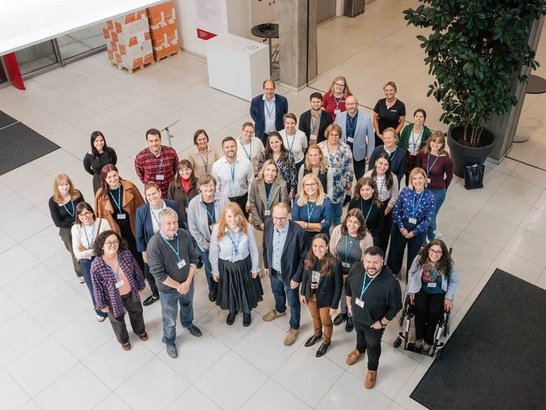
TCA “Diversity and Mobility: Erasmus+ in Higher Education Strategies – Data, Practice and Perspectives”
Participants from Higher Education Institutions from Croatia and Austria explored how Erasmus+ and internationalisation can become more inclusive, accessible and strategically embedded in higher education development.
Particular attention was given to communication and outreach strategies, as well as to the role of EUROSTUDENT data in understanding students' diverse needs, motivations and barriers to participation and in supporting policymaking.
Over the course of two days the activity combined expert presentations with interactive sessions, panel discussions and peer-learning formats. Participants had the opportunity to share experiences and examples from their day-to-day work, reflect on challenges and develop practical solutions for their own institutional contexts. Using European data and policy examples from Croatia and Austria, the discussion also explored how these findings can be turned into practical steps to make higher education more accessible and fair for everyone.
Communication and outreach: closeness instead of abstract messaging
Communication about Erasmus+ should be more closely connected to students’ everyday realities. Rather than foregrounding broad statements about international experience or friendships “from all over the world,” communication should address individual barriers, uncertainties and decision-making situations directly. Young people want to decide for themselves which relationships they build and which experiences matter to them. Communication is therefore most credible when it is created by students for students, following a genuine peer-to-peer approach.
International Offices operate within a challenging balance: on the one hand, they must communicate formal requirements, deadlines and documentation reliably, on the other hand, they need to communicate in an informal and empathetic way that understands students’ perspectives and personal challenges. As conventional emails do not always reach or engage students effectively, alternative approaches may be worth exploring. These could include using AI to make administrative communication easier to understand or developing central digital platforms that combine information on studies and Erasmus+ opportunities with opportunities for student-to-student exchange. The aim should not simply be to reach more students, but to provide relevant information in ways that help them assess which opportunities are right for them.
Removing barriers and enabling participation
The path towards an Erasmus+ mobility experience is often perceived as lengthy and bureaucratic. From the initial idea to the actual mobility, students may face up to a year of intensive administrative preparation. Concerns about recognition of credits, financial risks or potential job loss can be particularly discouraging. Once students anticipate an obstacle, they may disengage before they even begin to seek information.
This makes personalised support throughout the entire process especially important. Buddy systems, alumni networks and accessible formats such as Erasmus cafés can offer guidance, share lived experience and build confidence. It is also essential to acknowledge that mobility does not involve the same conditions for every student. A Blended Intensive Programme, for example, is not necessarily suitable for every academic discipline or personal situation.
In this context, equality does not simply mean treating everyone in exactly the same way. It means recognising different needs and ensuring that each person receives the support required to access comparable opportunities and achieve comparable outcomes. Higher education institutions can play an important role in this by creating inclusive environments and introducing practical initiatives that respond to the diverse needs of their student communities. These can range from quiet spaces for rest and retreat to second-hand shops and other support initiatives that make student life more accessible. Importantly, such initiatives should be designed to benefit all students, while acknowledging their different circumstances and needs. In doing so, institutions can not only reduce barriers but also foster a stronger sense of belonging, ensuring that every student feels welcome, valued and part of the wider academic community.
Targeted marketing and authentic content
According to marketing experts, students cannot be addressed as one homogeneous group. Different academic interests, career aspirations and personal circumstances call for more targeted communication. On platforms such as TikTok, Instagram and Snapchat, short, authentic and visually engaging content is considered particularly effective. Students themselves can play an important role as testimonials and content creators, sharing experiences that are often perceived as more credible than traditional promotional messages.
At the same time, this approach raises a broader question: by increasingly adapting communication to short attention spans and rapidly consumed content, are higher education institutions also reinforcing these very trends? While meeting students where they are is important, institutions should remain mindful of their role in shaping communication habits, rather than simply following them.
Beyond the format, communication should highlight the skills, career opportunities and personal development that can result from a degree or an international experience, while maintaining realistic expectations.
Different student seeds and motivations for mobility
International degree students are one example of how motivations for Erasmus+ mobility can differ significantly. Having already moved abroad to pursue their studies, some may not see an additional international experience as a priority or added value. Others may face financial, academic, social or personal barriers, such as difficulties integrating another mobility period into their study plans, concerns about losing established social connections or simply different priorities at their current stage of life. Similar considerations may also apply to other student groups.
This raises an important question for higher education institutions: rather than trying to convince every student to participate in Erasmus+ mobility, efforts should focus on better understanding the needs, motivations and barriers of different student groups. Not every mobility opportunity is equally relevant or suitable for everyone, and this should be acknowledged. By identifying where genuine interest and untapped potential exist, institutions can develop more targeted initiatives, communication and support measures that make a meaningful difference.
Ultimately, effective Erasmus+ communication and counselling should not simply aim to increase participation, but to help students make informed decisions and access opportunities that genuinely align with their individual circumstances and aspirations.
Student mental health and well-being
Student mental health has become an increasingly important concern, with psychological distress already on the rise before the COVID-19 pandemic. Academic pressure, social isolation and difficulties in building meaningful connections can affect students' well-being. For internationally mobile students, additional challenges such as adapting to a new environment, language barriers or being separated from established support networks may further contribute to these pressures.
Higher education institutions therefore have an important role to play in creating supportive environments that promote mental well-being and a sense of belonging. Beyond providing access to counselling and psychological support, initiatives that encourage social interaction, peer connections and participation in university life can make a meaningful difference. Mental health should not be seen as an isolated issue, but as an integral part of an inclusive and supportive student experience, both at home and abroad.